In today’s shift toward sustainable energy, solar panel systems are a top choice for homeowners and businesses alike. Yet, while solar panels get most of the attention, solar inverter efficiency is the quiet workhorse that determines how much of your harvested sunlight becomes usable electricity. Even a 2-3% difference in efficiency can translate to thousands of dollars in energy savings (or losses) over your system’s lifespan. This guide breaks down everything you need to know to understand, measure, and optimize solar inverter efficiency—so you get the most out of your solar investment.
What Is a Solar Inverter, and Why Does Efficiency Matter?
A solar inverter is the backbone of any solar system: it converts the direct current (DC) electricity generated by solar panels into alternating current (AC)—the type of power that runs your home, business, or feeds into the grid.
Efficiency, in this context, measures how well the inverter minimizes energy loss during this DC-to-AC conversion. Since no conversion is 100% lossless (some energy escapes as heat), a higher efficiency rating means more of your solar energy is turned into usable power. Here’s why it matters:
-
Lower Energy Bills: More usable power means less reliance on grid electricity, slashing monthly costs.
-
Faster ROI: Higher efficiency accelerates your return on investment by maximizing energy production.
-
Smaller Carbon Footprint: Reduced energy waste means your solar system has a more significant environmental impact.
For example, a 3% efficiency loss in a 5kW solar system could cost you over $500 in wasted energy over 10 years—making efficiency a non-negotiable metric.
How to Calculate Solar Inverter Efficiency
Calculating inverter efficiency is straightforward, and understanding the formula helps you compare models or monitor your system’s performance.
The core formula for solar inverter efficiency is expressed as a percentage:Efficiency (%) = (AC Output Power ÷ DC Input Power) × 100
Let’s put this into practice: If your inverter receives 1,200 watts (W) of DC power from your panels and outputs 1,164 W of AC power, its efficiency is (1,164 ÷ 1,200) × 100 = 97%.
Manufacturers rely on standardized metrics to reflect real-world performance, such as peak efficiency (the highest efficiency under ideal lab conditions), European (Euro) efficiency (weighted average across typical European load conditions), and CEC efficiency (weighted average used by the California Energy Commission for U.S. systems). Always ask which metric a manufacturer is quoting—Euro or CEC efficiency is far more representative of real-world use than peak efficiency alone.
What Is a “Ideal” Solar Inverter Efficiency?
Not all inverters are created equal. A “ideal” efficiency depends on your needs, but here’s a general breakdown:
-
< 93%: Low (outdated) – avoid, as they lead to high energy loss and poor long-term value.
-
93% – 95%: Average – suitable for basic residential systems on a budget.
-
95% – 97%: Good – ideal for most modern residential and business setups.
-
97%: Excellent (high-end) – perfect for premium systems that maximize savings and ROI.
Top-tier inverters now boast peak efficiencies of 98.5% or higher. Remember: Real-world efficiency may be 1-2% lower than lab-rated peak efficiency due to temperature, shading, or partial loads.
Factors That Affect Solar Inverter Efficiency
Efficiency isn’t a fixed number—it fluctuates based on several key factors. Understanding these helps you design and maintain a more efficient system.
Internal Design & Technology
The inverter’s hardware and tech determine its baseline efficiency:
-
Advanced Materials: Inverters using silicon carbide (SiC) or gallium nitride (GaN) semiconductors have lower resistance and faster switching speeds, cutting heat loss. For example, a 5kW inverter with SiC components can boost efficiency by 3-5% vs. traditional silicon-based models.
-
Cooling Systems: Active fans or passive heatsinks prevent overheating (a major cause of efficiency loss).
-
MPPT Technology: Maximum Power Point Tracking (MPPT) algorithms adjust panel voltage/current to harvest the most energy—critical for variable sunlight. Advanced inverters with multiple MPPT channels perform even better in shaded setups.
Load Conditions
Inverters work best at 30% – 80% of their rated capacity (the “sweet spot”). Low loads (e.g., early morning/late afternoon) drop efficiency because fixed internal power use (for cooling, controls) makes up a larger percentage of total input. Full loads (e.g., midday peak sunlight) increase heat, reducing efficiency over time.
Ambient Temperature & Installation
Heat is the enemy of inverter efficiency. High temperatures increase resistance in components, leading to more energy loss. An inverter in direct sunlight on a 90°F (32°C) day may lose 2-3% efficiency vs. one in a shaded, ventilated area. Dust/dirt buildup clogs vents, trapping heat—regular cleaning prevents this.
Sizing & Panel Matching
Mismatched inverters and panels waste energy. Undersized inverters can’t handle peak panel output, causing “power clipping” (lost energy). Oversized inverters operate at low loads most of the time, dragging down efficiency. The sweet spot? Size your inverter to 80% – 110% of your solar array’s capacity (e.g., a 5kW array pairs with a 4kW – 5.5kW inverter).
Solar Inverter Types & Their Efficiency
Different inverter types excel in different setups—choose based on your system’s size and environment.
-
String Inverters: Typically 96% – 98% efficient, they’re cost-effective and easy to maintain, making them best for residential systems with uniform sunlight.
-
Microinverters: Ranging from 90% – 97% efficient, they optimize each panel individually.
-
Central Inverters: Boasting over 98% efficiency, they’re built for commercial and industrial or large-scale systems, delivering high efficiency for high-volume power.
Do Inverters Lose Efficiency Over Time?
Yes—but the decline is gradual. Most modern inverters maintain high efficiency for 10 – 15 years (backed by warranties). Key causes of long-term efficiency loss include heat stress (prolonged high temperatures degrade components), dust buildup (blocks cooling), and component wear (electrolytic capacitors age over time). With regular maintenance (cleaning, firmware updates, professional inspections), you can slow this decline and extend your inverter’s lifespan.
4 Tips to Improve Solar Inverter Efficiency
Maximizing efficiency doesn’t stop at installation—follow these steps to keep your system performing at its best.
-
Optimal Installation
Place the inverter in a cool, shaded area (e.g., a garage wall or under a canopy) with good airflow. Avoid heat sources (e.g., hot water heaters, ovens) and confined spaces.
-
Regular Maintenance
Clean vents and fans every 3-6 months to prevent dust buildup. Update inverter firmware (manufacturers often release efficiency-boosting updates). Schedule annual professional checks to test components and calibrate settings.
-
Proper Sizing & Matching
Work with an installer to size your inverter to your array (following the 80% – 110% rule). Use panels and batteries that match your inverter’s voltage and current specs to avoid bottlenecks.
-
Leverage MPPT Effectively
Ensure panels are oriented to minimize shading (even small shadows reduce MPPT effectiveness). Choose inverters with multiple MPPT channels if your roof has varying sun exposure (e.g., east/west-facing panels).
The Environmental & Economic Impact of Efficient Inverters
Efficient inverters aren’t just good for your wallet—they’re good for the planet:
-
Energy Savings: A 2% efficiency gain in a 5kW system saves ~200 kWh/year (enough to power a fridge for 6 months). Over 25 years, that’s 5,000 kWh saved.
-
Lower Carbon Footprint: 5,000 kWh of solar energy avoids ~3.5 tons of CO₂ emissions (equivalent to planting 90 trees).
-
Long-Term ROI: Higher efficiency cuts payback time by 1-2 years for most systems—turning your solar investment into profit faster.
AUXSOL: R&D-Driven Innovation in High-Efficiency C&I Solar Inverters
AUXSOL exemplifies how robust research and development (R&D) capabilities fuel breakthroughs in solar inverter efficiency, particularly for commercial and industrial (C&I) applications.
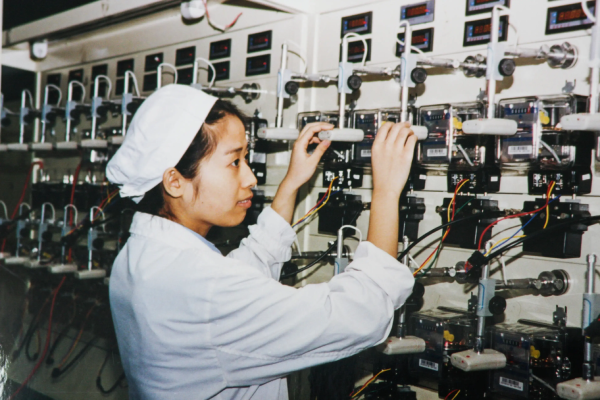
As a subsidiary of Sanxing Electric Ningbo, under AUX Group (est. 1986), AUXSOL focuses on on-grid inverters, hybrid inverters, battery packs and energy storage systems. Its R&D strength is a cornerstone: it operates 7 major R&D centers, holds ISO9001, ISO14001, and ISO45001 certifications, and its inverters are validated by CQC, CGC, VDE-AR-N 4105, and other domestic and international institutions. This rigorous R&D and certification framework ensures its products meet global standards for quality and efficiency.
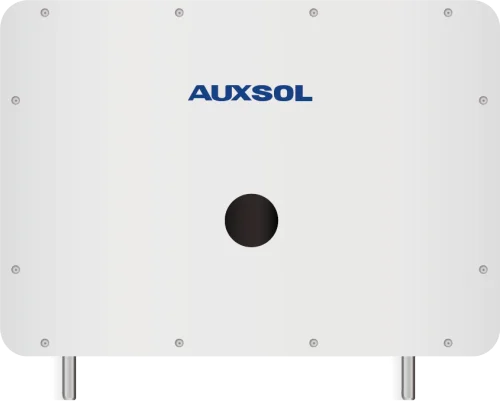
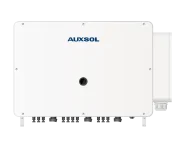
In the C&I on-grid space, AUXSOL’s string inverters (spanning 50–350kW) deliver industry-leading conversion efficiency of up to 98.6% through advanced topology architecture and innovative control algorithms. These inverters also support 1.5 times DC overmatching (with a maximum 20A input current per string), making them fully compatible with 182/210 high-efficiency large-format modules to boost energy yield and ROI. Beyond efficiency, they integrate intelligent string-level monitoring, IV curve scanning, and 5-second cloud data refresh—enabling precise fault diagnosis via smart O&M platforms. With 21 domestic after-sales service networks and overseas centers in Brazil, Poland, Germany, AUXSOL’s footprint ensures reliable support for its high-performance inverter solutions.
Final Thoughts
Solar inverter efficiency is the unsung hero of a high-performing solar system. By choosing an inverter with a 95%+ efficiency rating, optimizing installation and maintenance, and matching it to your array, you’ll maximize energy savings, reduce your environmental impact, and enjoy a faster return on your solar investment. Whether you’re powering a small home or a large commercial and industrial facility, never underestimate the role of inverter efficiency in your solar journey. Innovations like those from R&D-driven leaders such as AUXSOL show that as technology advances, so too does the potential to harness more of the sun’s energy for a sustainable future.


 Essential cookies


SL正视图.png!thumb500)
TL-正视图.png!thumb500)
TL-正视图.png!thumb500)