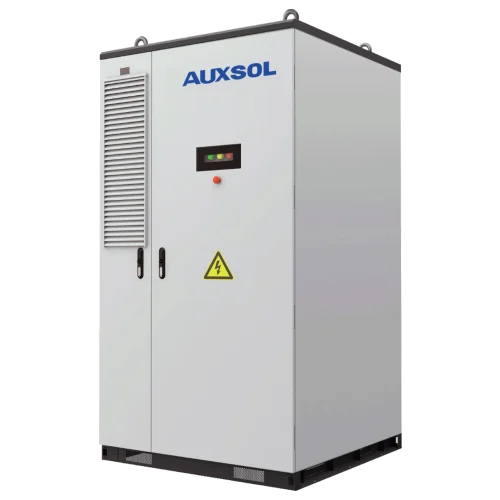
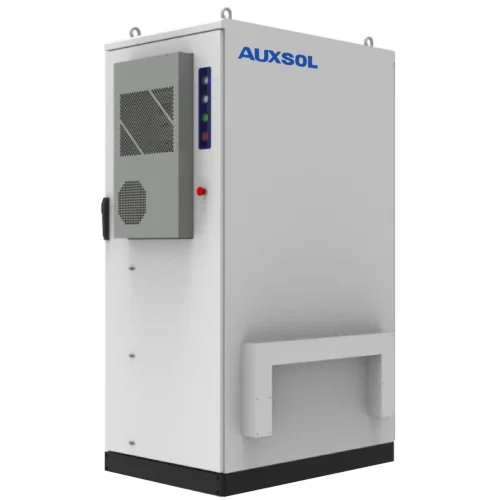
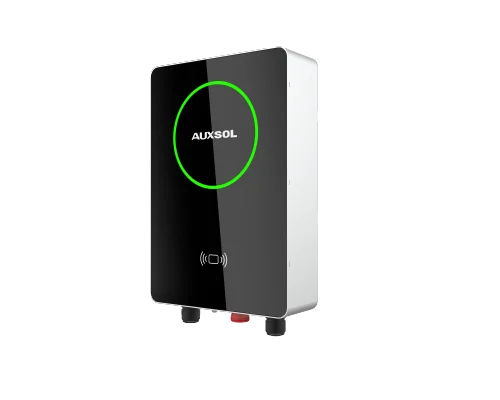
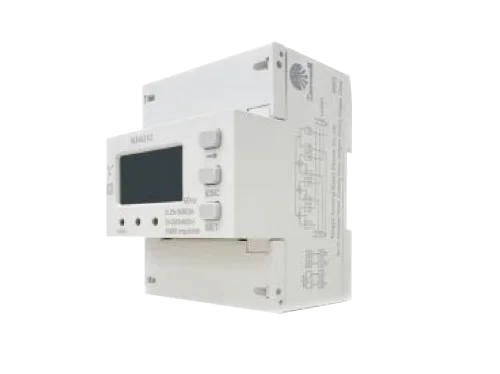
In today's shift toward renewable energy, solar power stands out as a reliable and accessible solution for both households and businesses. But for solar energy to seamlessly power our homes, offices, and communities, there's a critical component that bridges the gap between solar panels and the electrical grid: the solar grid-connected inverter. This device isn't just a "converter"—it's the brains behind making solar energy usable, efficient, and grid-friendly. Let's break down what solar grid-connected inverters are, how they work, their key roles in grid integration, and why they're essential for maximizing your solar investment.
What Is a Solar Grid-Connected Inverter?
At its core, a solar grid-connected inverter is a specialized piece of power electronics that solves a fundamental mismatch: solar panels generate direct current (DC) electricity, but the electrical grid (and nearly all our appliances) runs on alternating current (AC). Think of it as a translator—converting the "language" of solar energy into one that the grid understands.
But modern grid-connected inverters do far more than just DC-to-AC conversion. They're designed to work exclusively with the electrical grid, ensuring that solar power aligns with the grid's technical requirements (like frequency and voltage) to avoid damage to equipment or disruptions to power flow. Unlike off-grid systems, grid-connected setups don't require battery storage (though they can be paired with batteries for backup), making them simpler and more cost-effective for most users.
A Quick Science Refresh: DC vs. AC
-
DC (Direct Current): Flows in a single, constant direction at a steady voltage—this is what solar panels produce, as sunlight excites electrons in the panel's semiconductors in a consistent way.
-
AC (Alternating Current): Flows back and forth in the circuit, with voltage switching between positive and negative. This variability is critical for the grid, as it allows electricity to be transmitted over long distances efficiently and safely.
The inverter's job is to take that steady DC and "switch" its direction rapidly (often thousands of times per second) to create an AC output. It then uses filters to refine this output into a clean sine wave—the smooth, repeating voltage pattern the grid relies on. Without this sine wave, solar power could damage sensitive electronics (like computers or HVAC systems) or destabilize the grid.
How Does a Solar Grid-Connected Inverter Work?
The process of converting solar energy to grid-ready power happens in three key steps, all managed by the inverter:
-
DC Input from Solar Panels
First, solar panels absorb sunlight and convert it into DC electricity. This DC power is sent directly to the grid-connected inverter—either from a single panel (in the case of microinverters) or a "string" of panels (in string inverters) for larger systems.
-
DC-to-AC Conversion with Precision
Inside the inverter, solid-state transistors (made from semiconductors like silicon or gallium arsenide) act as fast switches, reversing the direction of the DC hundreds or thousands of times per second. This creates a rough AC waveform, which is then refined using filters to eliminate noise and produce a pure sine wave. The result? AC power that matches the grid's frequency (typically 50Hz or 60Hz, depending on your region) and voltage (e.g., 220V for homes, 380V for C&I setups).
-
Grid Synchronization & Power Flow Management
Once the AC power is clean and stable, the inverter doesn't just feed it into the grid blindly. It uses sensors to sync with the grid's frequency and voltage—a critical step called "grid following." If the grid's frequency or voltage drifts outside safe limits (e.g., during a storm or sudden demand spike), the inverter adjusts its output to match, ensuring compatibility.
It also manages power flow smartly:
-
If your solar panels produce more power than you're using (e.g., during midday sunshine when no one's home), the inverter sends the excess to the grid. Many utilities reward this with net metering—crediting your bill for the surplus power you contribute.
-
If your solar production falls short (e.g., on cloudy days or at night), the inverter lets you draw additional power from the grid seamlessly—you'll never notice a gap in supply.
Key Roles of Grid-Connected Inverters in Grid Stability
As more homes and businesses adopt solar, the grid is shifting from a "centralized" system (powered by large fossil fuel or nuclear plants) to a "distributed" one (powered by thousands of small solar setups). This shift relies on grid-connected inverters to keep the grid stable—here's how they do it:
-
Voltage & Frequency Regulation
The grid's health is measured by two metrics: frequency (how often the AC sine wave repeats) and voltage (the "force" pushing electricity through wires). For example, in the U.S., the grid operates at 60Hz—if frequency drops below 59.5Hz or rises above 60.5Hz, it signals a mismatch between supply and demand.
Grid-connected inverters monitor these metrics in real time. If frequency drops (meaning demand is outpacing supply), the inverter can temporarily increase its solar output to help restore balance. If voltage spikes (common in areas with lots of solar), the inverter can absorb excess reactive power (see below) to bring it back to safe levels. This "frequency response" and "voltage ride-through" capability is mandatory for modern inverters, as it prevents blackouts and equipment damage.
-
Reactive Power Management
You might not have heard of reactive power, but it's essential for grid efficiency. Unlike "real power" (the electricity that powers your lights), reactive power doesn't do actual work—it's the "magnetic force" that helps motors (in fridges, AC units, or C&I machines) run. When voltage and current are out of sync (a common issue with motor-driven equipment), reactive power is wasted, leading to inefficiency and higher energy costs.
Grid-connected inverters solve this by supplying or absorbing reactive power on demand. For example, if a neighborhood has lots of air conditioners running, the inverter can inject reactive power into the grid to sync voltage and current, reducing waste. This is especially valuable for distributed solar setups (like rooftop panels), as reactive power is hard to transmit over long distances—local inverters provide it where it's needed most.
-
Safety: Anti-Islanding Protection
One of the most critical safety features of grid-connected inverters is anti-islanding protection. If the grid goes down (e.g., during a storm), the inverter immediately shuts off its AC output—even if solar panels are still producing power. Why? Sending power into a "dead" grid could electrocute utility workers repairing power lines. This feature is non-negotiable; all grid-connected inverters must meet strict safety standards (like UL 1741 in the U.S.) to prevent this risk.
Types of Solar Grid-Connected Inverters
Not all grid-connected inverters are the same—they're designed to match different system sizes and needs. Here are the three most common types:
-
String Inverters
-
How they work: Connect a "string" of 10–20 solar panels (wired in series) to a single inverter. The inverter converts the combined DC power of the string to AC.
-
Best for: Residential or small commercial and industrial systems (e.g., 5kW–20kW). They're cost-effective, easy to install, and work well if all panels are exposed to similar sunlight (no heavy shading).
-
Microinverters
- How they work: A small inverter (typically 200W–400W) is attached to each individual solar panel.
- Best for: Homes with uneven sunlight (e.g., trees, chimneys blocking some panels) or complex roof layouts.
-
Central Inverters
- How they work: Large, commercial and industrial-grade inverters (50kW–MWs) that handle power from hundreds or thousands of solar panels. They're used in utility-scale solar farms or large commercial and industrial facilities (e.g., warehouses, factories).
- Best for: Large-scale systems where space is abundant and panels are uniformly exposed to sunlight.
Why Invest in a High-Quality Grid-Connected Inverter?
Your solar panels might be the "face" of your system, but the inverter is its "heart"—a low-quality inverter can waste up to 10% of your solar production or fail prematurely, undoing your energy savings. Here’s why quality matters:
-
Higher Efficiency = More Savings
Top-tier inverters have conversion efficiencies of 96–99%. That means almost all the DC power from your panels is turned into usable AC power. A low-efficiency inverter (90% or less) could cost you hundreds of dollars per year in lost energy—money that would otherwise stay in your pocket via lower utility bills.
-
Durability & Long Lifespan
A well-built grid-connected inverter lasts 10–15 years (some even longer with maintenance), matching the lifespan of most solar panels (25–30 years). Cheap inverters may fail in 5–7 years, requiring costly replacements. Look for inverters with robust enclosures (e.g., IP65 rating) to resist dust, rain, and extreme temperatures—critical for outdoor installations.
-
Smart Monitoring & Remote Management
Modern grid-connected inverters come with built-in monitoring tools (via apps or web portals) that let you track:
- How much energy your system is producing in real time.
- How much excess power you're sending to the grid.
- Any issues (e.g., a shaded panel or inverter error) that need attention.
This visibility helps you optimize your energy use (e.g., run appliances during peak solar hours) and catch problems early, reducing downtime.
Tips for Choosing the Ideal Solar Grid-Connected Inverter
Ready to pick an inverter for your solar system? Keep these four factors in mind:
- Match the Inverter to Your System Size: Don't oversize or undersize—if you have a 10kW solar array, choose a 10kW inverter (or two 5kW inverters in parallel for redundancy). Oversizing can lead to inefficiency; undersizing wastes solar production.
- Check Efficiency Ratings: Look for maximum power point tracking (MPPT) efficiency (how well the inverter extracts power from panels) and conversion efficiency (how well it converts DC to AC). Aim for MPPT efficiency above 98% and conversion efficiency above 96%.
- Prioritize Safety & Compliance: Ensure the inverter meets local safety standards (e.g., UL 1741 in the U.S., IEC 61727 in Europe) and includes anti-islanding protection, surge protection (for lightning), and overheating safeguards.
- Consider Warranties: A good warranty (10–15 years) signals the manufacturer's confidence in their product. Some brands offer extended warranties for an extra fee—worth it for long-term peace of mind.
Final Thoughts
Solar grid-connected inverters are the unsung heroes of solar energy. They don't just convert power—they ensure your solar system is safe, efficient, and grid-friendly, while helping you save money and reduce your carbon footprint. Whether you're a homeowner installing a 5kW system or a business building a 50kW array, choosing the right inverter is just as important as choosing quality solar panels.
By understanding how grid-connected inverters work and what to look for, you can make an informed decision that maximizes your solar investment for decades to come. And as the world shifts to 100% renewable energy, these devices will only become more critical—powering a cleaner, more resilient grid for everyone.




 Essential cookies


SL正视图.png!thumb500)
TL-正视图.png!thumb500)
TL-正视图.png!thumb500)