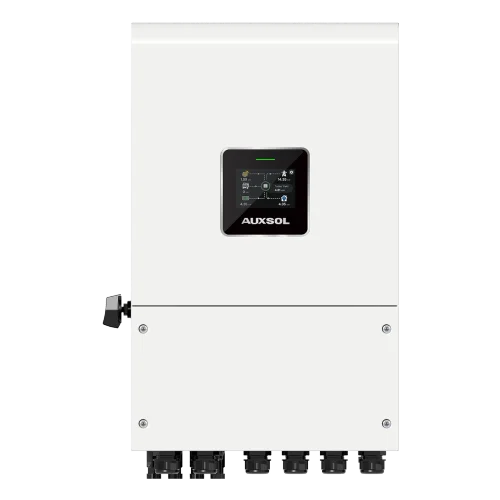
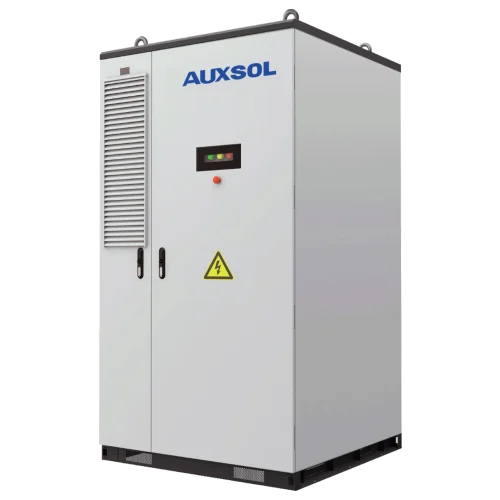
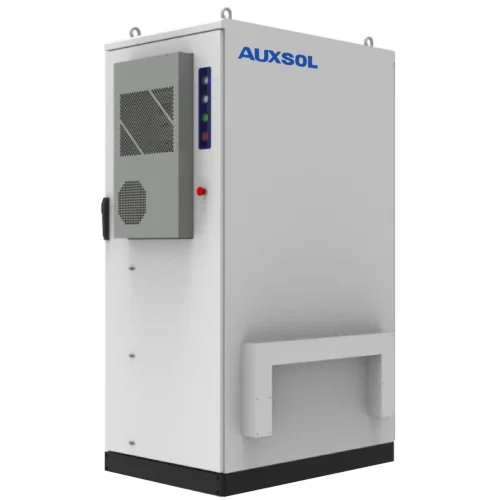
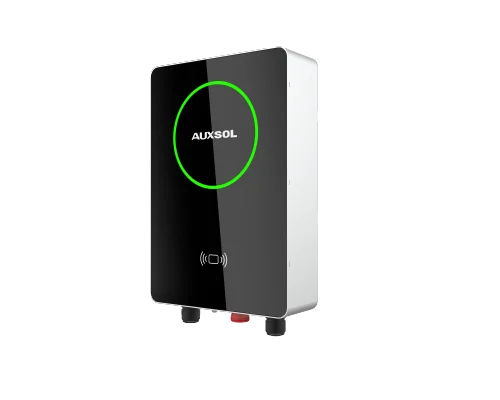
As a C&I solar project developer or energy manager, you know that every kilowatt of energy lost translates to lost revenue. Traditional solar inverters often fail to keep up with changing environmental conditions—fluctuating sunlight, extreme temperatures, or partial shading—resulting in subpar performance and delayed returns on your solar investment. This is where Maximum Power Point Tracking (MPPT) solar inverters step in, acting as the "intelligent brain" of your solar system to unlock its full potential.
In this guide, we’ll answer the most critical questions about MPPT solar inverters, address the pain points that matter most to C&I users, and explain how this technology can elevate your solar project’s efficiency and profitability.
What Is an MPPT Solar Inverter, and How Does It Solve Common C&I Solar Pain Points?
An MPPT solar inverter combines two core functions: converting direct current (DC) from solar panels to usable alternating current (AC) and dynamically tracking the Maximum Power Point (MPP) of your solar array. Unlike traditional PWM (Pulse Width Modulation) inverters, which operate at a fixed voltage, MPPT inverters use advanced algorithms to continuously adjust the working voltage of solar panels—ensuring they always operate at the point where power output is highest.
For commercial and industrial users, this solves three major pain points:
-
Low energy efficiency: MPPT inverters recover 15-30% more energy compared to non-MPPT systems, especially in low-light or partial shading conditions. For a 1MW solar farm, this could mean an additional 150-300MWh of electricity annually—directly boosting revenue.
-
Unstable performance in harsh environments: Extreme temperatures, dust, and humidity often disrupt inverter operations. High-quality MPPT inverters with IP65 protection (fully dust-tight and water-jet resistant) maintain stability in deserts, coastal areas, or agricultural fields.
-
Slow ROI: By maximizing energy production and reducing maintenance costs, MPPT solar inverters shorten your payback period by 1-3 years—critical for C&I projects with tight budget timelines.
How Does MPPT Technology Work in C&I Solar Systems?
The science behind MPPT is straightforward but powerful. Solar panels have a non-linear relationship between voltage and current, and their MPP changes constantly with sunlight intensity and temperature. Here’s a step-by-step breakdown of how MPPT solar inverters operate:
-
Continuous sampling: The inverter constantly measures the voltage and current output of the solar array, calculating real-time power (P = V x I).
-
Perturb and observe: Using algorithms like "perturb and observe" or incremental conductance, the inverter makes small adjustments to the load voltage.
-
Optimal adjustment: If power increases after adjustment, the inverter continues in that direction; if power decreases, it reverses the adjustment. This cycle repeats hundreds of times per second to track the MPP dynamically.
-
Efficient conversion: Once the MPP is found, the inverter converts DC to AC at the highest possible efficiency, delivering more power to your facility or the grid.
For commercial and industrial systems with multiple solar panel strings, dual or multiple MPPT inverters offer even greater benefits. They track the MPP of each string individually, minimizing energy loss from partial shading (e.g., from nearby buildings or trees) that would cripple single-MPPT systems.
Why Is MPPT Superior to PWM for C&I Solar Projects?
Many entry-level solar systems use PWM inverters, but these are ill-suited for commercial and industrial applications where scale and efficiency matter. The key differences highlight why MPPT is the better choice:
|
Feature
|
MPPT Solar Inverter
|
PWM Inverter
|
|
Energy Efficiency
|
95-98% efficiency, 15-30% more energy output
|
85-90% efficiency, significant energy loss in variable conditions
|
|
Environmental Adaptability
|
Adjusts to sunlight/temperature changes; works well in low light/partial shading
|
Fixed voltage, poor performance in non-ideal conditions
|
|
Commercial Scalability
|
Dual/multiple MPPT options for large arrays
|
Limited to small systems, inefficient for large-scale projects
|
|
ROI Timeline
|
Shorter (1-3 years faster payback)
|
Longer, due to lower energy production
|
How to Choose the Ideal MPPT Solar Inverter for Your Project?
Selecting the ideal MPPT solar inverter requires aligning the product with your project’s specific needs. Here are the key factors to consider:
-
Power capacity: Match the inverter’s capacity to your solar array size (e.g., 50kW inverters for 50kW arrays, or modular options for scalability).
-
Number of MPPT channels: For large arrays or areas with potential shading, choose dual or multiple MPPT channels to optimize each panel string.
-
Environmental protection: Opt for IP65 or higher protection for outdoor installations in harsh environments (deserts, coastal areas, farms).
-
Algorithm performance: Look for inverters with adaptive MPPT algorithms (e.g., fuzzy logic or neural network-based) that offer faster response times to sudden sunlight changes.
-
System compatibility: Ensure the inverter integrates seamlessly with your battery storage (if using) and grid connection requirements.
Ready to Maximize Your Solar Project’s Potential with MPPT Solar Inverters?
For C&I solar projects, every percentage point of efficiency counts. MPPT solar inverters solve the core pain points of low energy output, unstable performance, and slow ROI—making them a non-negotiable investment for forward-thinking energy managers and developers.
Our team specializes in designing MPPT solar inverter solutions, from small rooftop systems to large utility-scale farms. We offer IP65-rated models with advanced adaptive algorithms, dual/multiple MPPT channels, and seamless grid/battery integration. Contact our technical consultants today to get a quote and learn how our MPPT solar inverters can boost your project’s efficiency and profitability.




 Essential cookies


SL正视图.png!thumb500)
TL-正视图.png!thumb500)
TL-正视图.png!thumb500)