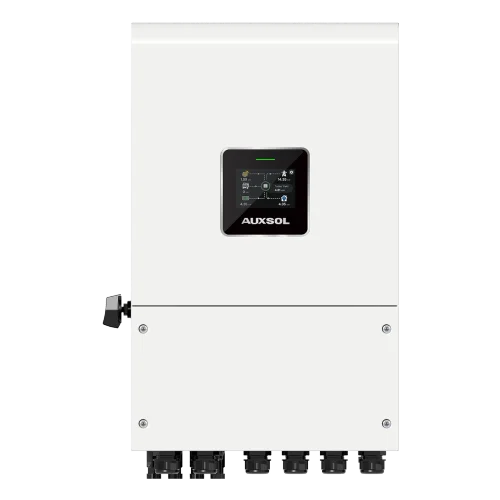
An on-grid inverter is the energy hub of a PV system, converting DC power from modules to AC power for local loads and the grid. While the device itself is
standardized, its installation should be adapted to the specific conditions of each site. A well-planned, “customized” installation approach does not mean
changing the product, but aligning its placement, wiring, and protectionwith the actual environment and project needs.
-
Understanding the Role of the On-Grid Inverter
In a typical grid-connected PV system, PV modules, the on-grid inverter, household or C&I loads, and the public grid work together. The on-grid inverter:
-
Tracks the maximum power point (MPPT) of each string or MPPT channel.
-
Converts DC to AC and synchronizes with the utility grid.
-
Manages protection functions such as anti-islanding, over-current, and residual current monitoring.
Because the inverter is central to energy conversion and grid interaction, installation quality has a direct effect on safety, reliability, and long-term energy yield.
-
Site Conditions and Mechanical Installation
The first step in tailoring on-grid inverter installation is understanding the physical site:
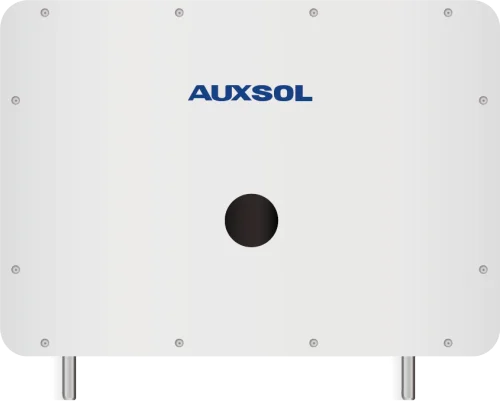
Many AUXSOL on-grid inverters are designed with IP66 enclosures, enabling outdoor wall mounting where exposure to dust and water is expected.
For indoor installations, adequate ventilation and clearance remain essential.
Inverters should be fixed to solid structures, with sufficient wall strength and clearances around the enclosure for airflow and maintenance. Horizontal
and vertical spacing between units must follow the manufacturer’s guidelines.
Each inverter has specified operating temperature and altitude ranges, with possible derating above certain thresholds. Locating inverters away from
direct sunlight/heat sources and ensuring airflow can reduce thermal stress and help maintain performance.
Proper mechanical design allows the inverter to operate comfortably within its environmental specifications.
-
DC Side Design and String Layout
A customized installation focuses heavily on the DC side design.
The number of modules per string and the number of strings per MPPT must be designed so that the operating voltage stays within the inverter’s MPPT
window and absolute voltage limits across seasons. AUXSOL on-grid inverters provide wide MPPT ranges and support significant DC oversizing, enabling flexible string layout.
Many modern three-phase on-grid inverters support up to 20 A per string and are compatible with large-format 182 mm or 210 mm high power modules.
Clustering modules with similar orientation and shading conditions on the same MPPT helps optimize yield.
Cable cross-sections, fuse or breaker ratings, and surge protection devices on the DC side should be selected according to current, distance, and local standards.
Inverters with integrated DC switches and DC surge protection can simplify the design.
A considered DC layout reduces losses, minimizes mismatch, and improves system safety.
-
AC Side Integration with the Grid
The AC side must also be adapted to the electrical infrastructure of the building or site.
AUXSOL three-phase on-grid inverters support common LV outputs such as 220V/380V and 230V/400V, making them suitable for many C&I and residential
systems. The connection point in the main distribution board should be selected based on available capacity and protection coordination.
AC cable sizing should consider continuous current, short-circuit capacity, and voltage drop. Properly rated breakers, contactors, and residual current
devices help fulfill local grid code and safety requirements.
Parameters such as power factor, active and reactive power control, and fault ride-through (FRT) behavior must be set according to local regulations.
Professional on-grid inverters support configurable settings for different grid codes through local or remote interfaces.
Careful AC planning ensures safe and compliant integration with the utility grid.
-
Monitoring, Communication, and Smart Features
Communication and monitoring are essential for modern PV systems and should also be planned project by project.
AUXSOL inverters provide RS485 as a standard and support optional WiFi, 4G, and LAN communication. The choice depends on site infrastructure and
the desired level of remote access.
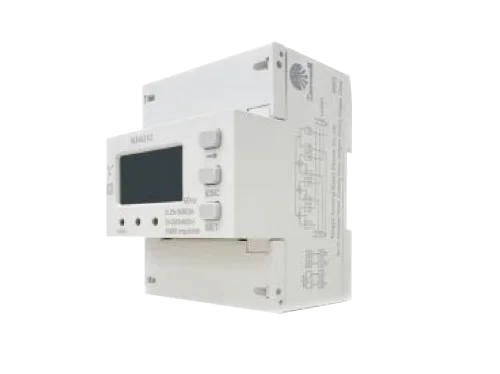
Connecting inverters to a smart meter, energy terminal collector, and cloud platform enables real-time monitoring of PV production, load consumption,
and grid interaction. This is particularly useful for C&I sites where energy data informs operational decisions.
Functions such as IV curve scanning and string-level monitoring help operation and maintenance teams quickly identify underperforming parts of the
system.
By tailoring monitoring architecture to each project, owners can better protect their investment over the long term.
-
Safety Distances and Maintenance Access
An aspect often underestimated is maintenance accessibility.
Installation instructions typically specify minimum clearances on all sides of the inverter to ensure airflow and allow technicians to open covers and
access terminals.
Where inverters include integrated DC switches or external AC breakers, these must be easily reachable for safe isolation during service.
Clear labeling of strings, AC circuits, and communication lines supports safe maintenance and troubleshooting.
These practical considerations reduce system downtime and simplify long-term service.
-
Working with Professional Installers
For best results, system owners can prepare information about roof layout, electrical infrastructure, and target system size, then work with qualified
local partners who follow product manuals and local standards.




 Essential cookies


SL正视图.png!thumb500)
TL-正视图.png!thumb500)
TL-正视图.png!thumb500)