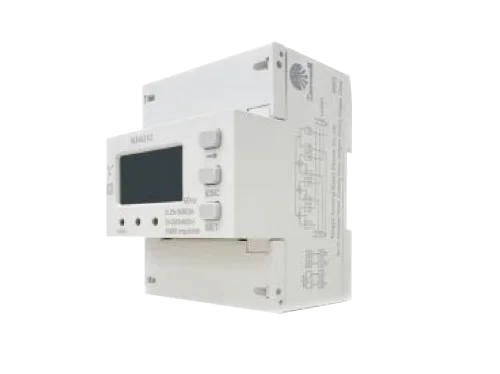
For many commercial and industrial (C&I) solar projects, the on-grid inverter is at the heart of the PV system and a key driver of overall lifecycle cost. While price is always important, looking only at the offer can easily result in higher operating risk and long-term expenses. This guide explains how to understand industrial on-grid inverter pricing and how to evaluate offers in a more comprehensive way
What Is A C&I On-Grid Inverter?
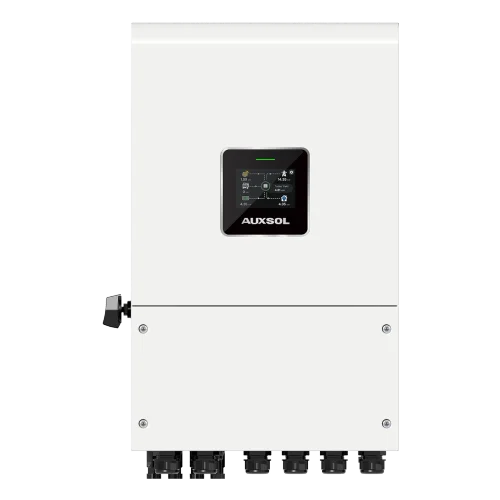
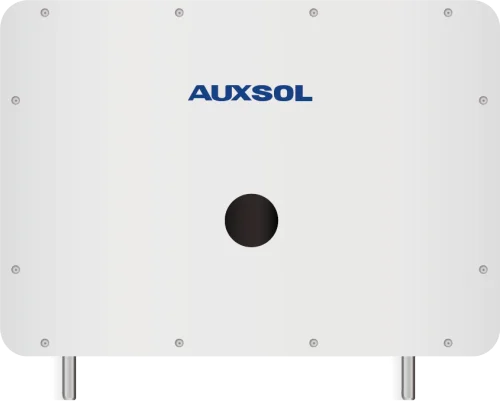
A C&I on-grid inverter (also called a C&I string inverter) converts DC power from PV modules into AC power synchronized with the utility grid. It is used in rooftop and ground-mounted systems for factories, warehouses, logistics centers, office parks, schools, and other C&I facilities.
Unlike off-grid inverters, on-grid inverters are designed to work in parallel with the public grid, follow local grid codes, and support safe export or self-consumption of PV energy. In many C&I projects, multiple three-phase string inverters in the 30–110 kW range are combined to match the required system capacity, while large systems may also consider high-power 250–350 kW models.
Key Factors That Shape C&I On-Grid Inverter Price
C&I on-grid inverter price is influenced by much more than just power rating. When comparing quotations, consider the following dimensions together.
Power Class and System Size
Inverters for C&I applications typically cover a wide power range, for example:
-
30–40 kW three-phase on-grid inverters for small rooftop projects
-
50–80 kW and 70–110 kW three-phase models for medium to large rooftops or small ground-mounted systems
-
250–350 kW high-voltage three-phase inverters for large C&I or utility-scale systems
As power increases, the cost per watt often becomes more attractive, but design flexibility may be reduced if you use only very large units. A balanced design usually combines appropriate inverter power classes with the layout of PV strings, roof segments, and available transformer capacity.
Voltage Level: LV vs. HV
C&I projects may use low-voltage (LV) or high-voltage (HV) inverter options depending on local grid standards and system design.
-
LV inverters (e.g., 220V/380V or 230V/400V, three-phase) are common in many rooftop projects and allow direct connection to typical low-voltage distribution panels.
-
HV inverters (e.g., 600 V, 690 V or 800 V three-phase outputs) are more common in larger plants, where they interface with medium-voltage transformers and can reduce current levels on the AC side.
While HV models may provide system-level savings through lower cable losses and more compact transformer design, the inverter itself usually integrates more advanced components and protections, which can affect price.
Efficiency, Oversizing, and Energy Yield
For many C&I owners, lifetime energy yield is as important as initial CAPEX. The following features directly influence how much energy the system can deliver over 20 years or more:
-
High conversion efficiency: professional three-phase on-grid inverters can reach maximum efficiencies up to 98.6%, helping to reduce conversion losses in daily operation.
-
DC/AC oversizing capability: support for 1.5× DC oversizing allows designers to install more PV module capacity on each inverter, improving energy production in the morning, afternoon, and cloudy conditions.
-
Wide MPPT voltage range: a broad operating window makes it easier to design string lengths that fit local climates and different module types, while maintaining good energy harvest.
An inverter with a slightly higher purchase price but higher efficiency and better oversizing capability can provide a more attractive levelized cost of energy (LCOE) for many C&I projects.
Reliability, Protection, and Environmental Performance
Industrial systems must operate for many years in demanding environments. Features that enhance reliability often add value:
-
Robust enclosure and protection: IP66 protection, wide operating temperature ranges, and high allowable altitude help inverters run within safe operating limits in harsh conditions such as dust, humidity, or high temperatures.
-
Advanced protections: integrated AFCI (DC arc-fault circuit protection), DC and AC surge protection, insulation resistance detection, and residual current monitoring improve system safety for buildings and personnel.
-
No derating at elevated temperatures: some C&I on-grid inverters are designed to operate at full power at around 45°C ambient temperature, avoiding unexpected energy loss in hot climates.
-
Long-life components: the use of film capacitors and optimized thermal design can support a long design lifetime with reduced failure risk.
These design choices often mean a higher initial cost, but they can reduce downtime and maintenance interventions over the life of the plant.
Communication, Monitoring, and Smart Functions
Modern C&I sites rely on real-time data and remote maintenance:
-
Standard communication interfaces such as RS485, and optional WiFi, 4G, or LAN, enable flexible integration with monitoring platforms and building management systems.
-
String-level monitoring and IV curve scanning help O&M teams quickly locate underperforming strings or connection issues.
-
Power control and grid support functions help sites comply with local grid codes and support stable operation during voltage or frequency fluctuations.
When comparing prices, include the value of integrated smart functions. They can reduce operational costs and simplify performance analysis.
Certification and Grid Code Compliance
For customers, the ability to connect to the grid without lengthy additional tests is important. Professional C&I on-grid inverters are typically certified against multiple international and regional standards such as:
-
EN 50549-1, IEC 61727, IEC 62116, IEC 61683
-
VDE-AR-N 4105, NC RfG, INMETRO and other local grid codes, depending on the target market
A properly certified inverter may look more expensive on paper, but it provides smoother grid-connection procedures and helps avoid hidden compliance costs.
Why “Price Per Watt” Is Not the Only Metric
Many procurement teams start by asking for the lowest price per watt. While this is a useful benchmark, it does not capture the full picture.
A more practical way to evaluate industrial on-grid inverter offers is to consider:
-
Lifetime energy yield: combining efficiency, DC oversizing, operating temperature performance, and expected availability.
-
System-level cost: including DC and AC cabling, combiner boxes (if any), transformer sizing, and installation labor.
-
O&M and downtime: how fast issues can be detected and resolved, and how reliable the hardware has proven to be.
-
Service and support: local or regional service centers, response times, spare parts availability, and digital tools.
When all of these aspects are considered, the “lowest price” inverter is not always the most economical option for the full lifecycle of a C&I PV plant.
The Role of a Professional Supplier in C&I Projects
Choosing a professional inverter supplier can significantly simplify C&I project delivery. AUXSOL, a subsidiary of Sanxing Electric Ningbo, under AUX Group (est. 1986), has emerged as a powerhouse in the solar inverter sector, focusing on on-grid inverters, hybrid inverters, battery packs, and energy storage systems.
AUX Group has decades of experience in electrical equipment and other industries, supported by multiple R&D centers and certified quality management systems (ISO 9001, ISO 14001, ISO 45001). AUXSOL builds on this foundation to offer efficient, reliable, intelligent, and user-friendly PV products. For C&I customers, AUXSOL provides a broad portfolio of three-phase on-grid inverters from 5 kW up to 350 kW, backed by global certifications and a growing service network, including customer service centers in Brazil, Germany, and Poland.
Working with a supplier that combines strong technical capabilities, a comprehensive product range, and dedicated service can help C&I investors handle not only purchase price but also long-term risk management.
How to Approach Budgeting for an C&I On-Grid Inverter
When your team prepares a budget for a new C&I PV project, consider the following practical steps:
Define the system size and grid conditions
Target PV capacity (kW or MW), roof or land layout, grid voltage level, and connection point.
Select the inverter power class
Decide whether to use multiple 30–40 kW, 50–80 kW, 70–110 kW, or even 250–350 kW units, based on design flexibility, maintenance strategy, and available space.
Decide on key technical requirements
Required efficiency range, oversizing ratio, IP rating, temperature range, monitoring interfaces, and necessary grid code certifications.
Request and compare quotations
Ask suppliers to specify all technical parameters, included accessories, communication options, and after-sales support conditions, not just a unit price.
Evaluate lifecycle value
Estimate expected energy yield and potential O&M savings, so that you can compare offers on a levelized cost basis rather than upfront price alone.
By following this process, many C&I owners can identify inverter solutions that balance competitiveness and reliability.
Conclusion: Focus on Value, Not Only on Price
Inverter price is an important reference, but it should be seen within the wider context of performance, reliability, certification, and service. A well-chosen inverter solution, combined with proper system design and professional installation, can support stable energy production for many years and help C&I sites move confidently toward cleaner energy use.




 Essential cookies


SL正视图.png!thumb500)
TL-正视图.png!thumb500)
TL-正视图.png!thumb500)