Why Solar PV Inverter Price Varies So Much
Solar PV inverter price is not defined by power rating alone. It reflects a mix of technology level, safety features, certifications, and after-sales support, which together
determine how suitable an inverter is for specific residential and C&I projects. Looking at these factors helps buyers compare offers more clearly instead of focusing only
on the lowest upfront cost.
Core Technical Factors That Influence Price
Several technical aspects have a direct impact on solar PV inverter price for on-grid systems.
Single-phase on-grid inverters from around 3–10 kW are common in residential systems, while three-phase units from 5–25 kW, 30–40 kW, 50–80 kW, 70–110 kW, and
even 250–350 kW serve C&I and larger applications. Higher power ratings and three-phase architectures generally come at a higher absolute price, though they may
reduce cost per watt.
Inverters with maximum efficiencies up to about 98.6% and DC oversizing capability (for example, up to 1.5× DC/AC) use more advanced topologies and components, which
can increase product cost but help improve lifetime energy yield.
Multiple MPPTs and high allowable string currents (often up to 20 A or more) add flexibility for complex roofs and large-format modules, and this additional hardware and
control complexity is reflected in pricing.
These parameters help explain why inverters with similar kW ratings can differ significantly in price.
Safety, Protection, and Housing: Hidden Cost Drivers
Beyond core conversion performance, safety and protection features have an important impact on solar PV inverter price.
Professional inverters typically integrate DC reverse-polarity protection, anti-islanding, short-circuit protection, output over-current protection, DC/AC surge protection, insulation
monitoring, ground-fault monitoring, and residual current detection. Each adds hardware and testing requirements.
Arc-fault circuit interruption (AFCI), string-level monitoring, and IV curve scanning require additional sensing and processing capability, contributing to higher product value and price.
IP66 enclosures, support for operation without derating up to about 45°C, and high allowable altitudes demand robust mechanical design and components. These elements influence
both cost and the environments where the inverter can be reliably used.
Systems installed in more demanding climates or in C&I environments typically justify the extra cost of such features.
Certifications and Grid Code Compliance
Compliance with international and national grid codes is another key contributor to solar PV inverter price.
Inverters used in Europe often need certifications such as EN 50549-1, VDE-AR-N 4105, NC RfG, and international standards like IEC 61727, IEC 62116, and IEC 61683. Achieving and
maintaining these certificates requires design work, lab testing, and documentation.
Compliance with IEC 62109 and EN 61000 series safety and EMC standards is essential for safe operation in diverse electrical environments.
Manufacturers that invest in broad certification coverage typically reflect these costs in pricing, while offering more flexibility to serve multiple markets with the same product families.
Service, Monitoring, and Total Cost of Ownership
Solar PV inverter price also includes the value of services and digital tools that support the product over its lifetime.
RS485, WiFi, 4G, and LAN interfaces, combined with cloud platforms and mobile apps, provide real-time monitoring and remote configuration options. This can reduce site visits and O&M costs.
AUXSOL, for example, has service centers in Brazil, Germany, and Poland, and supports its products with documentation, diagnostics, and after-sales services. This infrastructure is part of
the overall value proposition that sits behind the price on a quotation.
Considering these elements helps shift the discussion from inverter price alone to the total cost and value over the system’s operational life.
How AUXSOL Portfolios Illustrate Price Drivers
While exact prices depend on local distribution and project terms,
AUXSOL’s product lines show how features link to value:
-
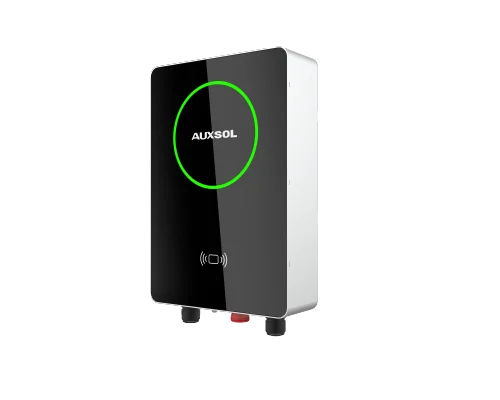
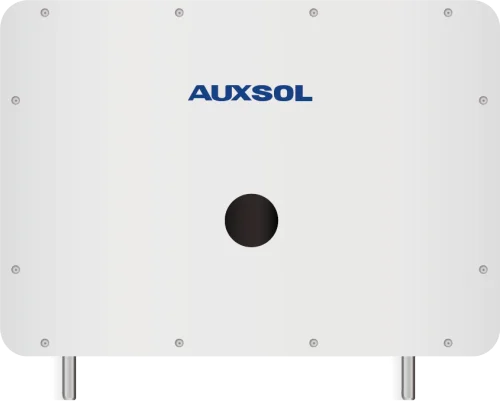
Residential single-phase on-grid inverters from 3–10 kW focus on compact design, IP66 protection, up to 1.5× DC oversizing, and efficiencies up to around 98.1%.
-
Three-phase on-grid inverters from 5–25 kW and 30–40 kW include features such as multiple MPPTs, high string currents, and efficiencies up to about 98.6% for C&I rooftops.
-
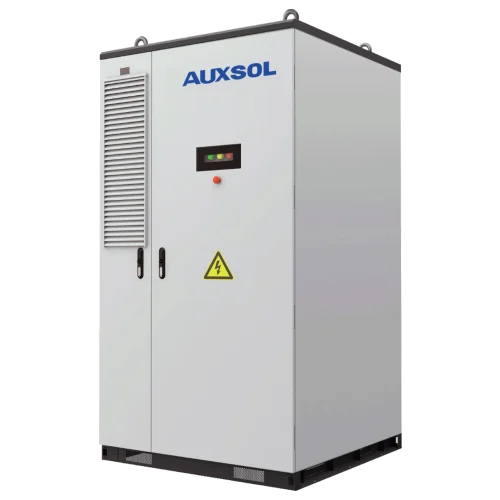
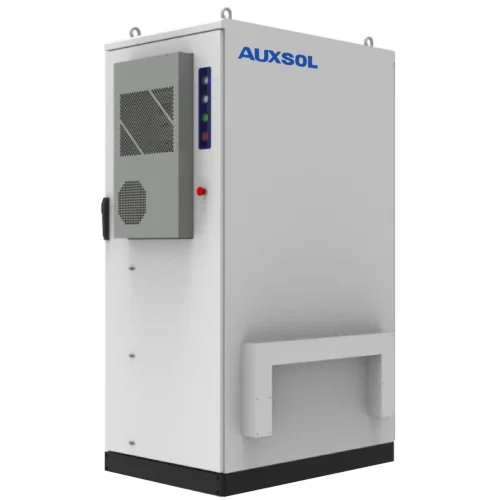
High-power three-phase models from 50–80 kW, 70–110 kW, and 250–350 kW combine wide MPPT ranges, strong protections, and rich communication options for larger C&I and distributed projects.
These families illustrate how higher performance, broader certification, and stronger service support tend to correspond with higher—but more fully justified—solar PV inverter prices.





 Essential cookies


SL正视图.png!thumb500)
TL-正视图.png!thumb500)
TL-正视图.png!thumb500)